

In the ever-evolving landscape of cybersecurity, learning how Wi-Fi networks work—and how they can be compromised—is both a valuable skill and an essential component of ethical hacking. Wi-Fi hacking involves identifying vulnerabilities in wireless networks and exploiting them to test their strength. This guide aims to introduce you to the basics of Wi-Fi hacking, including older protocols like WEP and the more secure WPA, WPA2, and WPA3 standards.
Understanding Wi-Fi Security Protocols
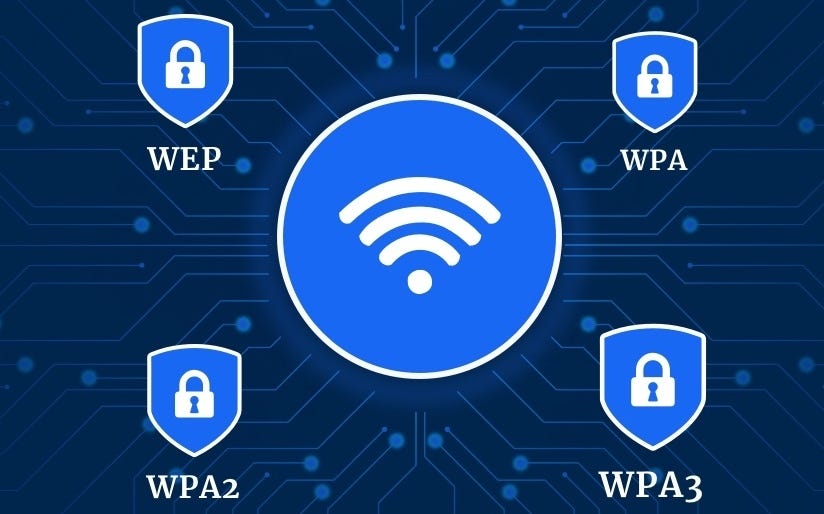
Before diving into hacking techniques, it’s crucial to understand the different types of Wi-Fi security protocols:
- WEP (Wired Equivalent Privacy): The oldest and most vulnerable. It uses weak encryption (RC4) and can be cracked within minutes using tools like Aircrack-ng. Though largely deprecated, some older systems still use WEP.
- WPA (Wi-Fi Protected Access): Introduced to fix WEP’s flaws, WPA uses TKIP for encryption but still has vulnerabilities. While it was an improvement, it’s no longer considered secure.
- WPA2: This is the most widely used protocol today, offering much stronger encryption through AES. While more challenging to break than WPA or WEP, WPA2 is still vulnerable to dictionary and brute-force attacks if weak passwords are used.
- WPA3: The latest and most secure standard, using SAE (Simultaneous Authentication of Equals) for more vigorous key exchange and forward secrecy. WPA3 is highly resistant to dictionary attacks, but researchers have still found limited side-channel vulnerabilities under specific conditions.
Tools and Techniques for Wi-Fi Hacking
Ethical Wi-Fi hacking requires a solid grasp of Linux (especially Kali Linux), a compatible Wi-Fi adapter that supports monitor mode and packet injection, and knowledge of essential tools:
- Aircrack-ng Suite: A robust set of tools used for capturing handshakes and cracking passwords.
- Wireshark: A network protocol analyzer used for packet inspection.
- Reaver: Targets WPS (Wi-Fi Protected Setup) vulnerabilities, especially useful against WPA/WPA2 routers with WPS enabled.
- Bettercap and Fluxion: Advanced tools for creating fake access points (Evil Twin Attacks) to capture login credentials.
- Hashcat: A high-speed password cracker that can work with captured handshakes.
Common Wi-Fi Hacking Methods
- Packet Sniffing: Capturing packets transferred over a wireless network using tools like Airodump-ng. This is the first step in most Wi-Fi hacking techniques.
- Handshake Capture and Cracking: For WPA/WPA2 networks, capturing a 4-way handshake between a device and a router is key. This handshake is then cracked using dictionary or brute-force attacks.
- Evil Twin Attack: The attacker sets up a rogue access point with the identical SSID as a legitimate one. Unsuspecting users connect and provide credentials, which the attacker captures.
- Deauthentication Attack: By sending fake death packets, a device is forced to reconnect to the network, allowing the attacker to capture the handshake.
- WPS PIN Attack: Exploits routers with enabled WPS, which often use weak PINs that can be brute-forced.
Ethical Considerations and Legal Boundaries
It’s essential to note that hacking into Wi-Fi networks without permission is illegal and unethical. The purpose of learning these techniques should be to protect and secure networks, not exploit them. Ethical hackers use this knowledge for penetration testing, helping organizations find and fix vulnerabilities before malicious actors do.
Always have written permission before testing a network. It is strongly recommended that you practice on your own hardware or within lab environments like Wi-Fi Pineapple setups or virtual labs.
Conclusion
Learning Wi-Fi hacking from scratch involves a deep understanding of security protocols, tools, and ethical responsibility. By mastering WPA3, WPA2, WPA, and WEP techniques in a controlled environment, you can strengthen your cybersecurity skills and help defend against real-world attacks. Just remember: with great power comes great responsibility—always hack ethically and legally.